A Synchronous Gameplay
“A Synchronous Gameplay” is a Live Action Roleplaying/ Alternate Reality game that allows both parents and children to play in a synchronous and asynchronous way. The game is designed with the purpose of giving both humans their own space, deepening the relationships between kids and parents and prevent the use of digital devices as virtual pacifiers.
The project started with a research phase to understand the current behaviors in parents and kids. During this phase, one of the most interesting findings was that parents have been increasing their dependance on digital devices to maintain their kids entertained while they rest or tend to their activities.
Based on this and using the framework of behavioral design, I came up with the following hypothesis:
- Parents use their digital devices as virtual pacifiers
- Kids depend on their parents to create entertainment and parent’s can’t follow up with the amount of activities they have to do during the day
- Parents usually have free time at the end of the day when kids are already going to bed
These behaviors are based on certain biases, specifically: Present bias, Intention Action Gap, Status Quo bias and Hassle Factor.
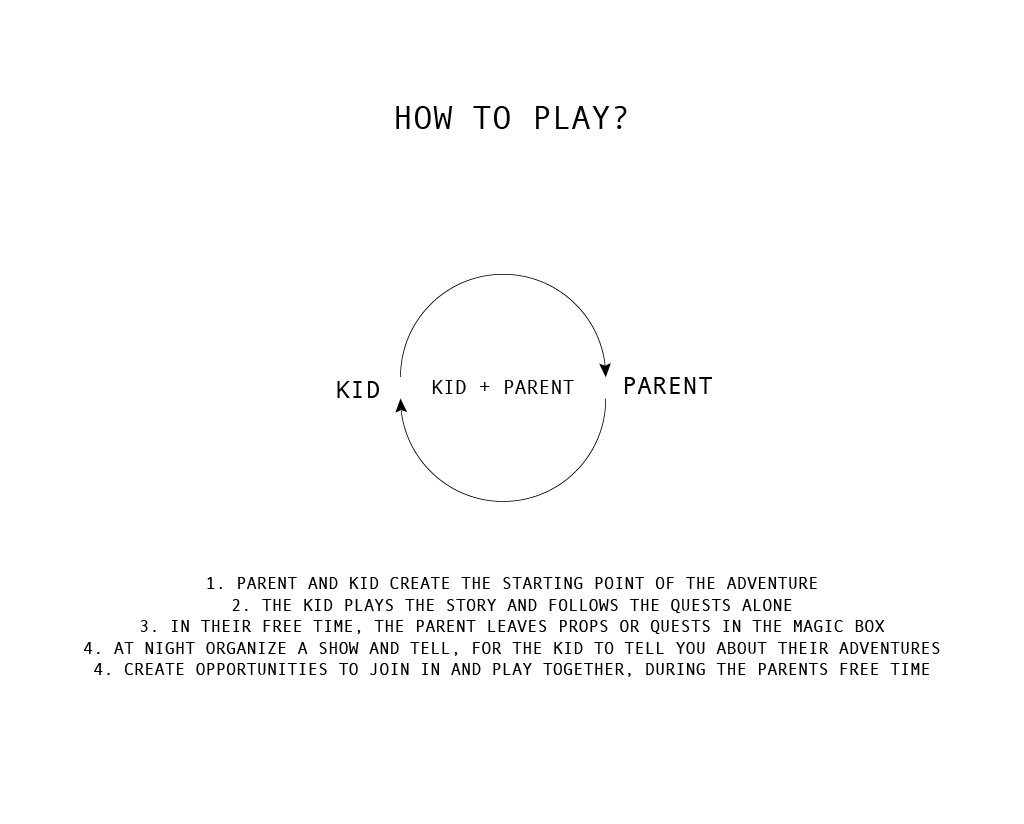
In order to tackle this, “A Synchronous Gameplay”, allows for both synchronous and asynchronous gameplay between a kid and their parents. This opens up the possibility for parents to play in their free time, independently if it matches with their kids schedule.
The project consists of a downloadable instruction manual for parents to start preparing the game. The game consists on designing and playing an alternate reality game with their kids, where they can create roleplaying scenarios based on their kids interests and in their immediate environment.
The manual details some ideas for possible scenarios for the parents to create, but the game allows for each family to create their own adventures and narratives.
Although the game is open for interpretation and iterations, there are certain elements that needs to be follow for it to work properly.
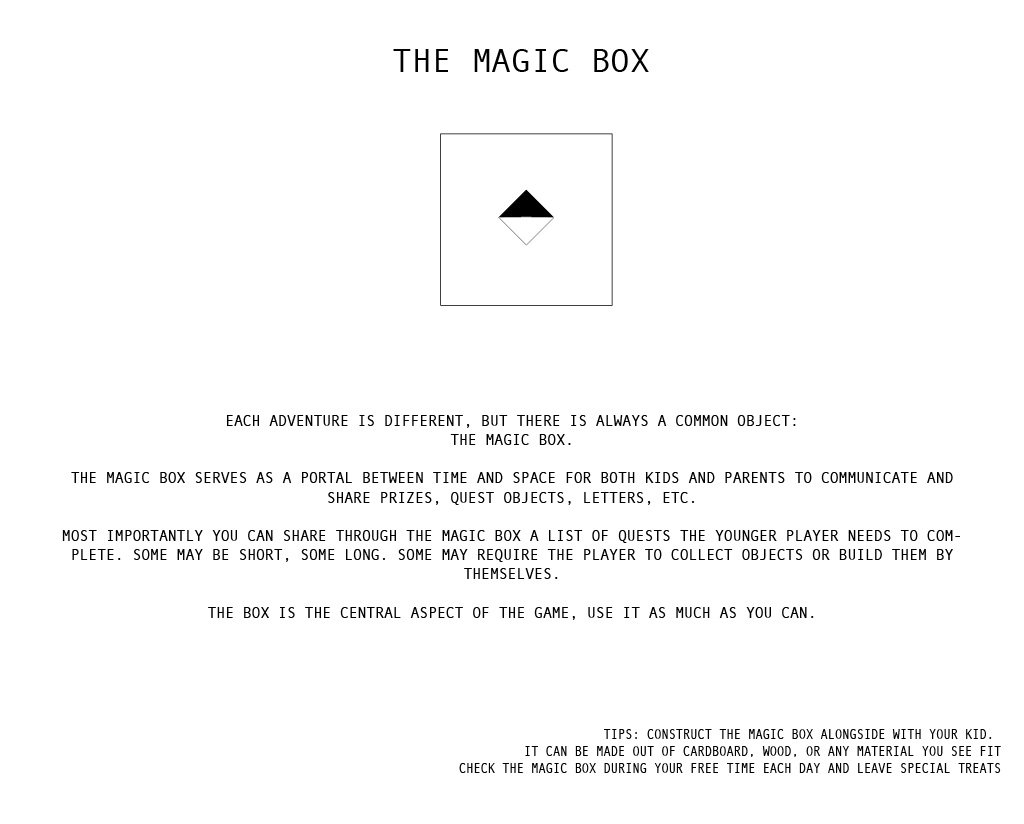
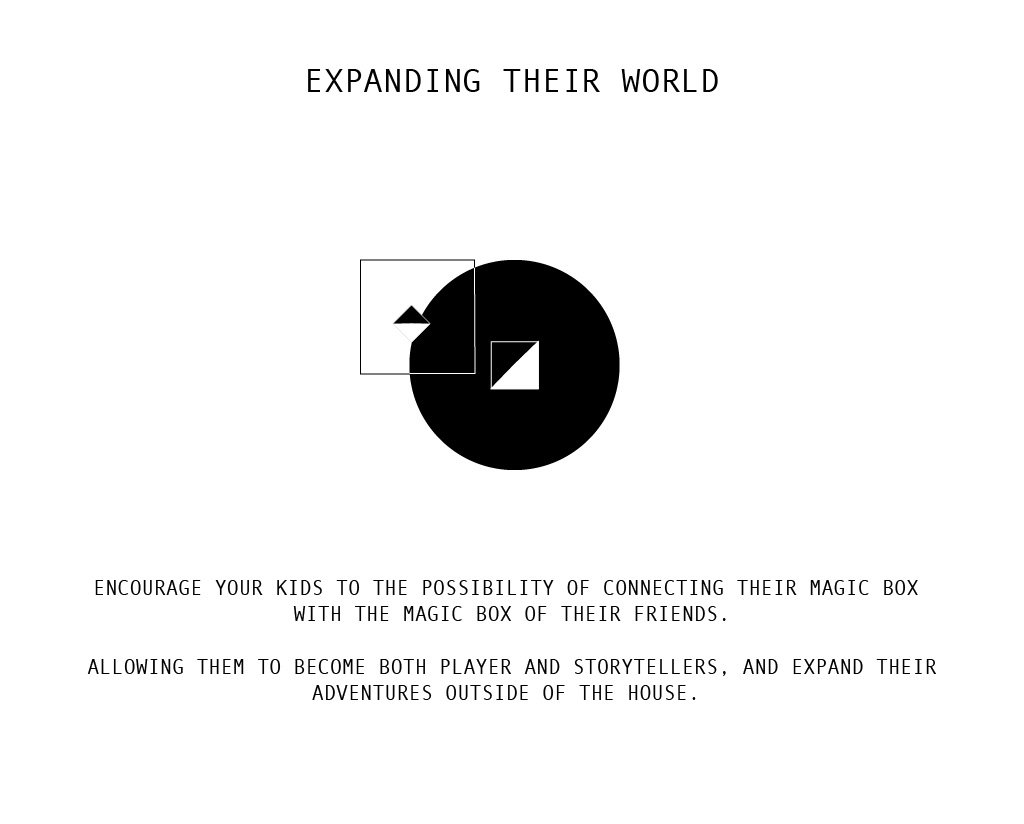
A box called “The Magic Box” needs to be placed in a visible space of the house and it serves as a communication device between space and time for both players. The parents can leave props or quests for kids to continue with the narrative of their story. This allows both kids and parents to play together even when they are separated by space or time. This magic box can also be used in the neighborhood, connecting multiple game worlds between kids and parents in an analog way.
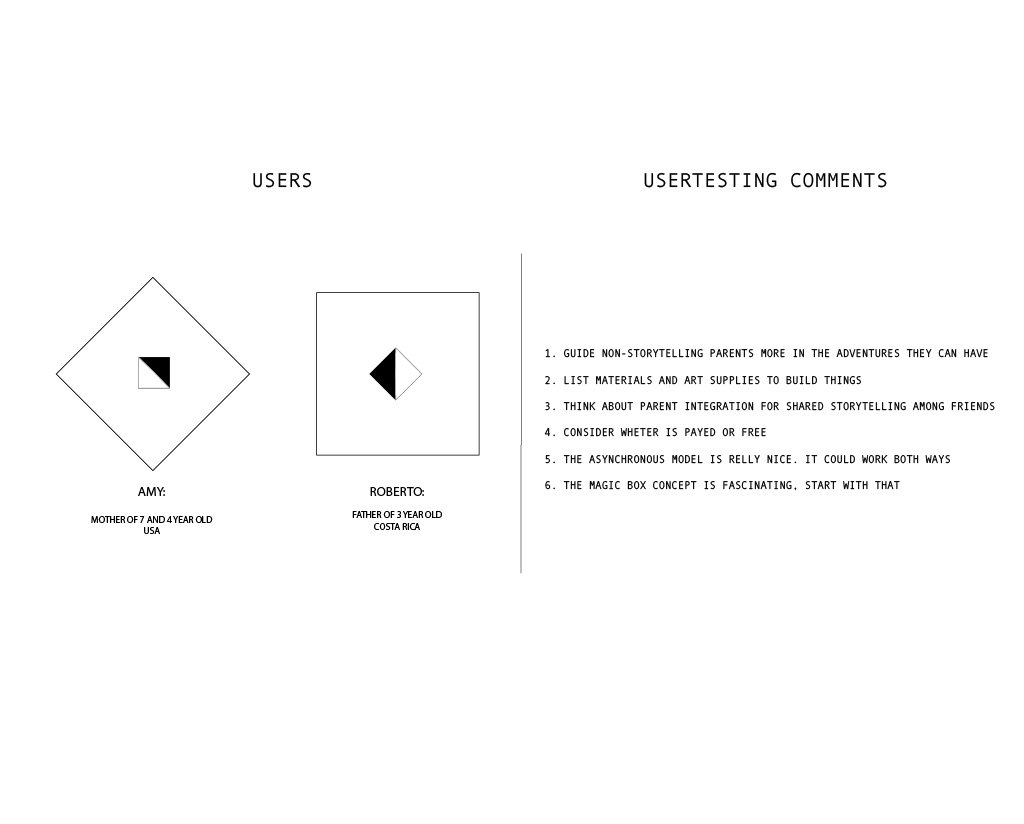
The project was user tested and various iterations were made to improve the project based on the feedback. Improvements include the addition of a list of possible materials for parents to do DIY projects during the game, a more approachable set of instructions and more ideas of possible quests and themes for their games.