AlternaKey
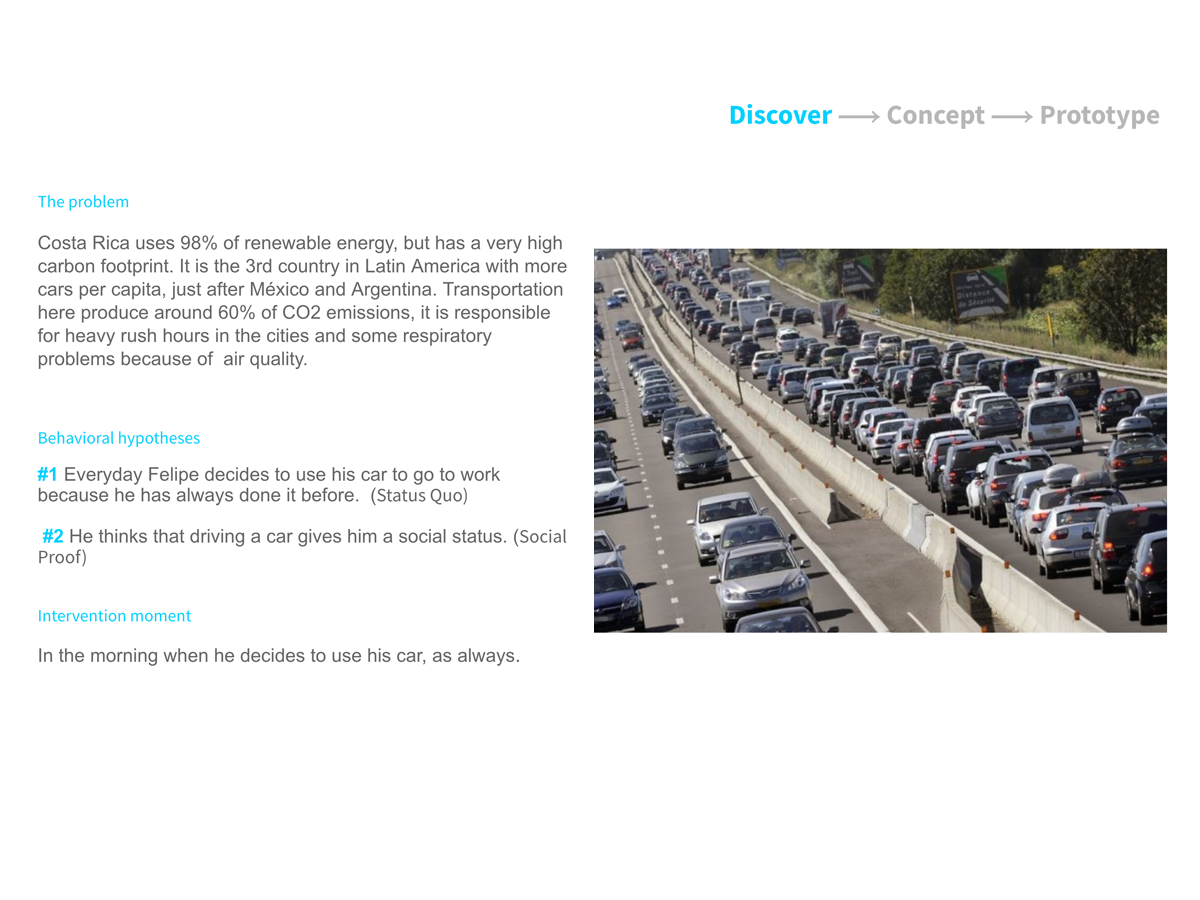
Costa Rica proudly uses 98% renewable energy, but it also has a very high carbon footprint. For instance, it is the third country in Latin America with more cars per capita just after México and Argentina. Cars and other forms of transportation produce around 60% of CO2 emissions, are responsible for heavy rush hours in the cities, and cause some respiratory problems because of the air quality. Currently, there are few interventions to help individuals realize the impact driving has on the environment and their health.
The Intervention
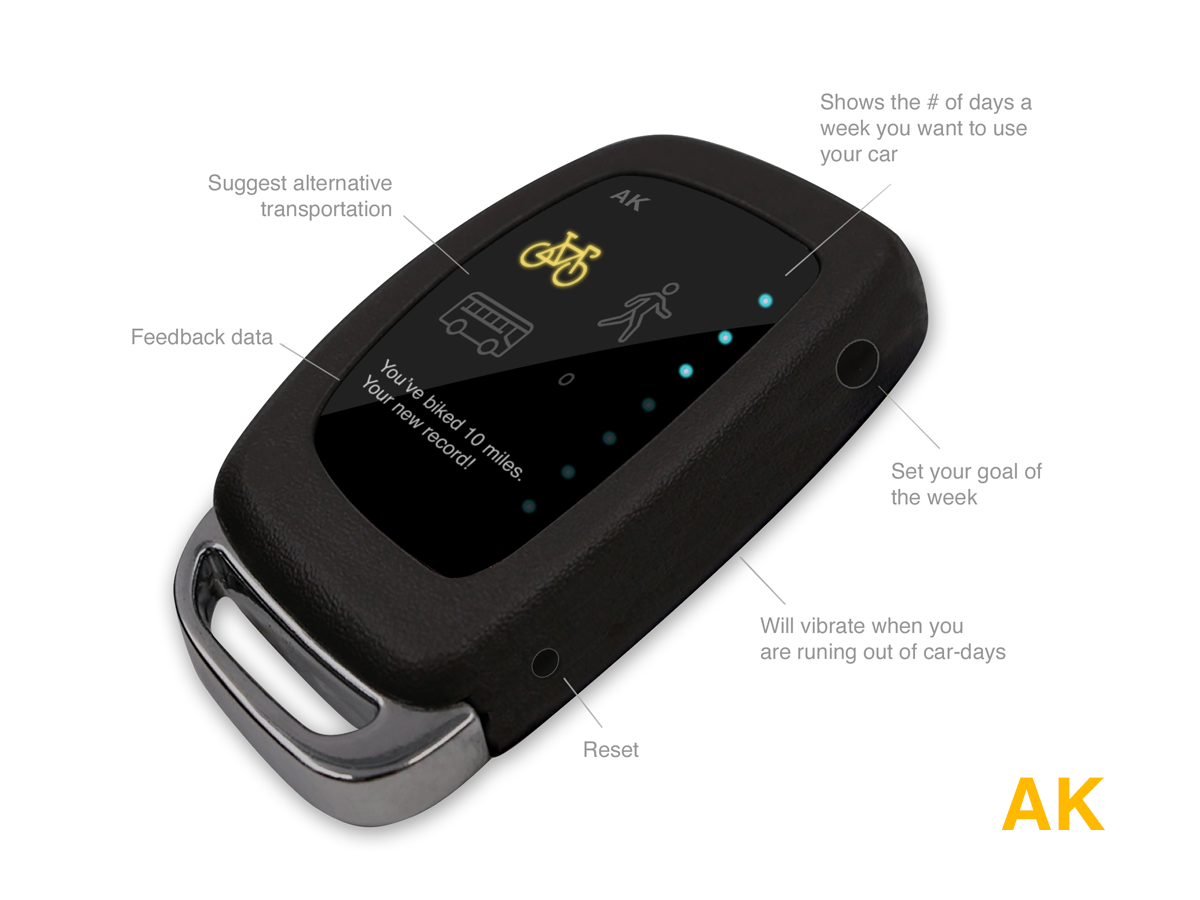
After completing preliminary research and uncovering behavioral reasons for why people drive so much even given the larger consequences, an intervention was developed at the individual level. The design consists of a National Health Insurance Campaign that uses a car key add-on that helps track how frequently a person uses their car during the week. This tool also encourages the use of alternative transportation such as walking and biking, as a healthier way to commute. As an extra feature, the device gives feedback about the goals the user has set, so they can track their progress.
Behavioral design strategies
Several behavioral design strategies were used when developing this concept. For instance, it helps to set concrete goals by setting in advance the number of days a person wants to use their car during the week. Encourages the user to try something new as the device suggests every day an alternative way to commute. It shows the potential benefits of using alternative methods by sending them feedback on their achievements and the progress of their new daily routine. In general, the idea is to focus on the small changes they can do to be healthier and contribute to decreasing carbon emissions, by reducing car use.