Brailli
As part of the Beyond the Pocket Computer course, students were asked to design a post-pocket computer experience in a problem area the team was interested in exploring. The design had to either improve an already existing smartphone experience or be impossible on a smartphone. With this brief in mind, Brailli was designed.
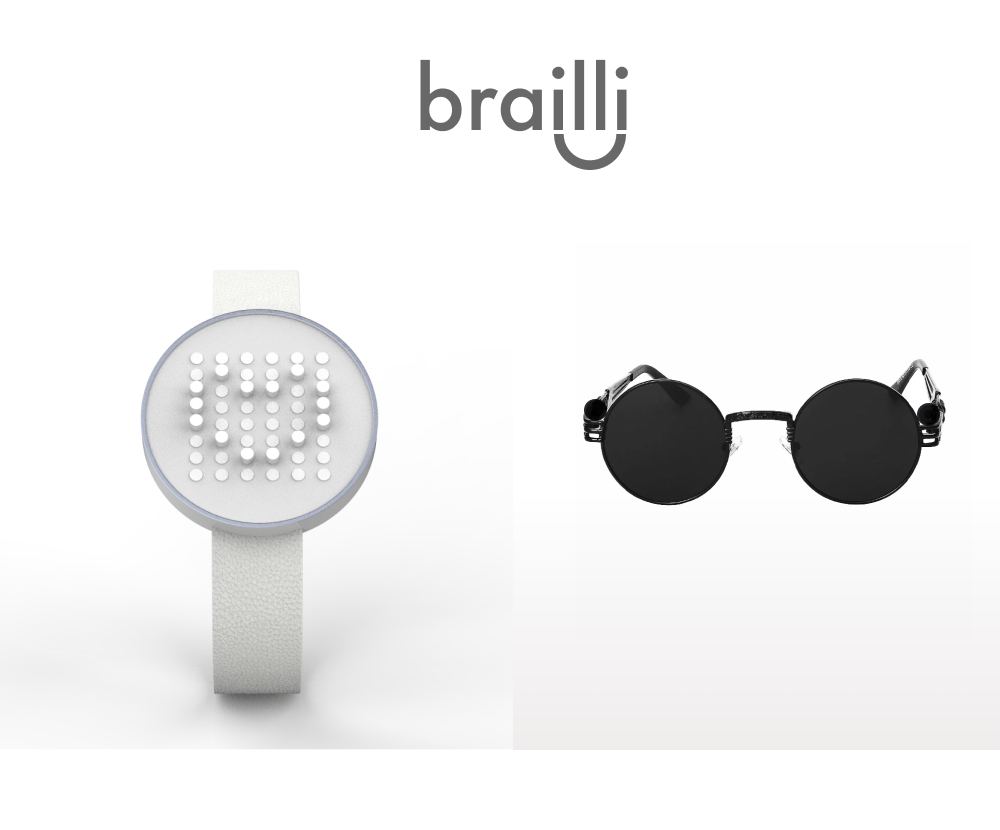
The problem statement pursued was how visually impaired and blind people have trouble understanding and reacting to other people's expressions during a conversation. Brailli is a wearable, eyewear device and earphones feature that facilitates the visually impaired to communicate better with their non-visually impaired peers by using braille. The concept intent is to avoid misunderstandings in conversations between visually impaired people and people with no visual disability.
From initial desk research, this findings caught the team’s attention:
- Visually impaired people might struggle understanding speech. “I have trouble understanding speech, people need to enunciate better. And speaking louder doesn’t help!”
- Visually impaired people can misinterpret what’s being said in a conversation as the disability prevents them from observing the hidden cues of a conversation. “I misinterpret what people say. A roll of eyes or a hint of a smile are all a sighted person needs to distinguish between sarcasm and honesty.
From these findings, the following How might we statement was formulated. How might we facilitate a way to make conversations more comprehensible for the blind and visually impaired?
More research around social interaction between visually impaired people and people with no visual impairment was done. The findings: 1) Lack of eye contact may cause sighted people to feel that they are not fully in communication with the other part. 2) Visually impaired people struggle aligning their gaze with the person speaking. 3) A sighted speaker uses the gaze to communicate with the conversation partner in a face-to-face communication. 4) Negative perceptions occur as misunderstandings in conversation may arise. 5) 65-95% of a message’s emotional impact comes through non-verbal communication.
Some findings from the interview with a visually impaired person were:
- They recognize the context in which emojis could be used even though they are not able to see them.
- Depending on their condition, they might feel embarrassed as their eyes might seem strange for people with non visual disabilities.
- The ‘robotic voices’ in smartphone solutions for the visually impaired are significant and not annoying as it helps them resume their daily lives.
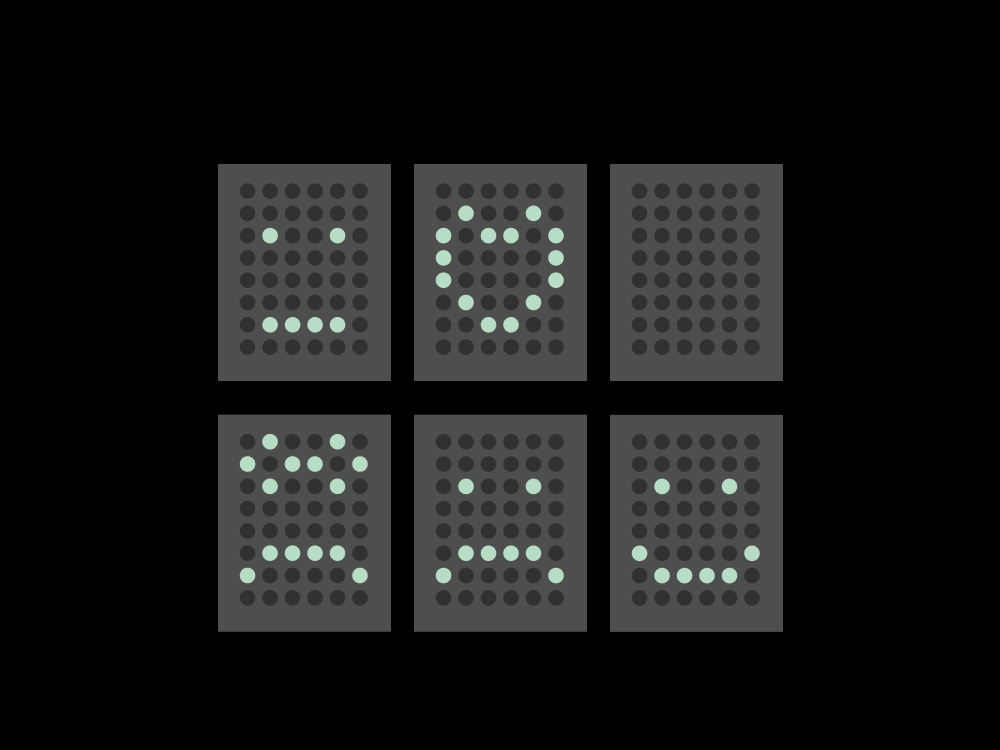
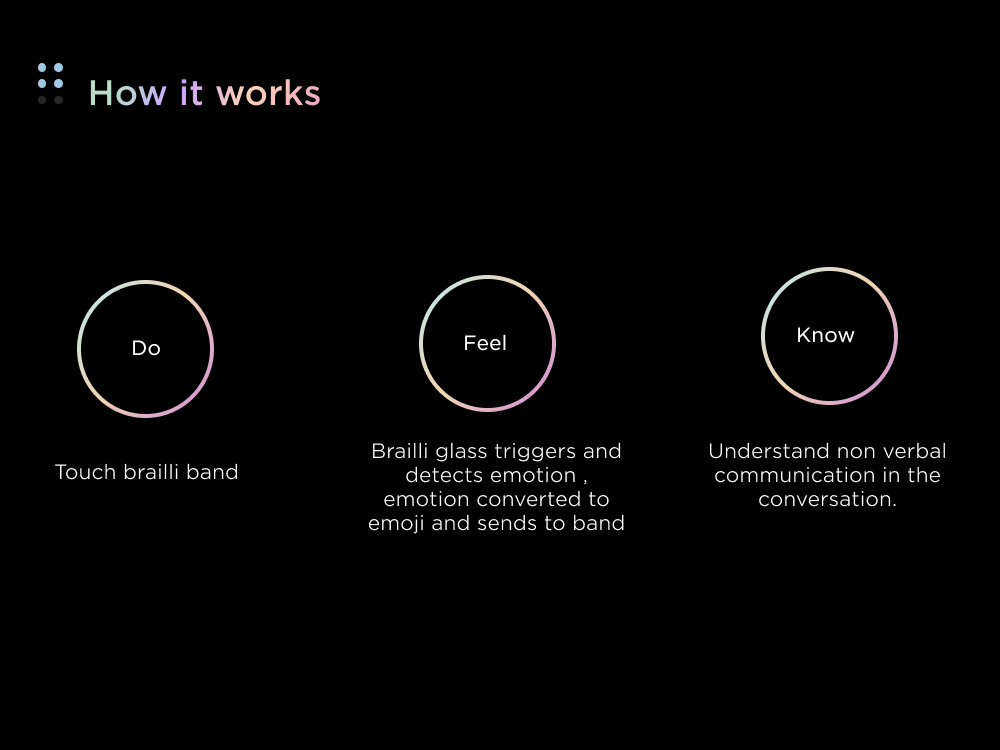
Driven by research the team came up with key interactions: Do - Visually impaired people touch the Brailli band to have a better understanding of their communication partner's facial expressions. Feel - Brailli eyewear triggers and detects communication partner’s facial expression and then sends it to the wearable as a braille emoji. Sound is also used to direct the gaze towards the person speaking. Know - Visually impaired people use the device when they desire to have greater self-awareness of the conversation they are taking part of.
Lastly, the team decided to use braille as a form of understanding for the following reasons:
- It’s a tool visually impaired people already use.
- Audio messages are impractical when a conversation is going on.
- Hearing is most important for visually impaired people.