Intro to Arduino/Physical Computing
//Sensing and controlling the world using small computers
Workshop Dates: July 9 – 13, 2018
Enrol here!
Keywords: Physical computing, Arduino, IoT, prototyping, code, electronics
Description:
Computers are ubiquitous in our lives. They live on our wrists, in our kitchens and by the bus stop. These computers are becoming increasingly powerful, small, connected and cheap. This new wave of pervasive computing is also known as The Internet of Things.
Learning the basics of Physical Computing gives us a powerful shortcut into this realm. It is an incredible tool to understand how things work, and how we can hack them to behave the way we would like them to. It is also a fast prototyping technique that allows us to quickly test and demonstrate an idea, that might otherwise require a much higher level of technical knowledge to try out.
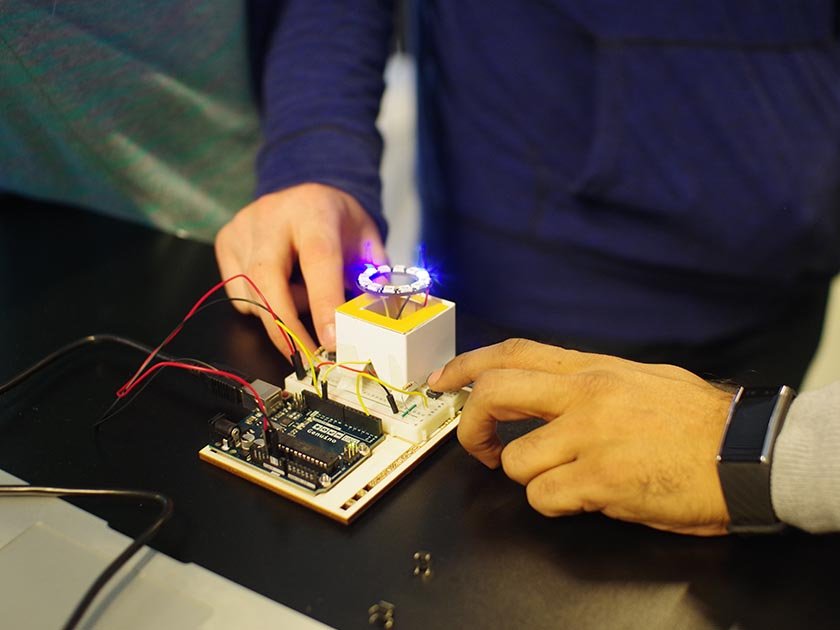
Arduino is an open source electronics platform, that enables designers and makers to work hands on with Physical Computing and create objects can sense and control the physical world. An Arduino board can read inputs from sensors (e.g. motion, temperature) and turn it into an output (e.g. motor, light). It can also communicate with applications running on a computer and communicate with the internet. Combining all these building blocks makes it possible to experiment and come up with new ways of interacting with computers.
Through a series of short lectures, hands on exercises and design-and-build challenges aligned with the UN Sustainable Development Goals, we will explore and learn the basic principles of Physical Computing and the Arduino platform.
Learning Expectations:
After the workshop, each participant will:
- Use Arduino as a sensing and output device
- Get familiar with controlling electronics through logic and code
- Gain an understanding of physical computing tools and techniques
Learn the role and potential of Programming and Physical Computing within the design process
Prerequisites:
In this course, we will cover all the basics to get started with physical computing. No prior experience with electronics or coding is necessary. Everybody can join.
CIID will provide Arduino kits (CIID will keep the ownership after the workshop).
Participants will need to bring their own laptop, with minimum requirements:
Mac OS X 10.7 Lion or never
Windows 8.1 or 10
Faculty: Ubi De Feo and Bjørn Karmann
Where: United Nations City Copenhagen
Participants: People from all over the of the world. All backgrounds are welcomed.
Language: All courses are taught in English
Fee: 7.300 DKK / 980 EUR per workshop. 10% student discount!
Schedule: The workshops generally run from Monday to Friday, from 9 am to 5 pm. Tuesday and Friday’s activities will run until 7 pm.
Enrol now: There is a maximum number of 20 places available for each workshop, first comes first served. Enrolment will be closed when the workshops are full.
See more Workshops
Frequently Asked Questions