raDiance
raDiance is a mobile application that helps you achieve a better vitamin D balance by beautifully visualizing your daily sun exposure and providing gentle tips.
SUN EXPOSURE & VITAMIN D
We crave the sun. When the sun is shining we enjoy the warmth of its radiation and the happiness boost induced from bright sunlight. UVB radiation stimulates the natural production of vitamin D which is critical for good health and disease prevention. Probably best known for promoting stronger bones, vitamin D also boosts your immune system, stimulates brain development, and promotes healthy cardiovascular and muscular function.
The most effective way to meet your daily dose of vitamin D is to expose bare skin to sunlight, however too much sun increases risk of skin cancer. Worldwide, an estimated 1 billion people suffer from inadequate levels of vitamin D while, on the other spectrum, skin cancer affects between 2 and 3 million people annually and rates of incidence are currently increasing. Through a cheerful and accessible user experience, raDiance provides a highly usable solution to achieve a healthy, balanced level of sun exposure.
RADIANCE
raDiance combines user-input data about skin color, amount of skin exposed, and time in the sun with environmental data including date, time, latitude, altitude, and weather, into an algorithm that estimates a person's UV exposure. This complex information is beautifully displayed in a half disk of sun rays.
As a person fills their daily quota for sun exposure, the disk fills with rays and turns from a low blue color to a comfortable orange. Too much sun exposure and the rays turn a burning red. The application also provides a gentle tip for the user to optimise their vitamin D balance. If the person’s UV exposure is low, raDiance recommends the amount of sun the person needs given the day's conditions, while if it is too high, it recommends covering up or wearing sunscreen. If conditions are poor, such as during winter months in northern Europe, raDiance recommends taking a vitamin D supplement.
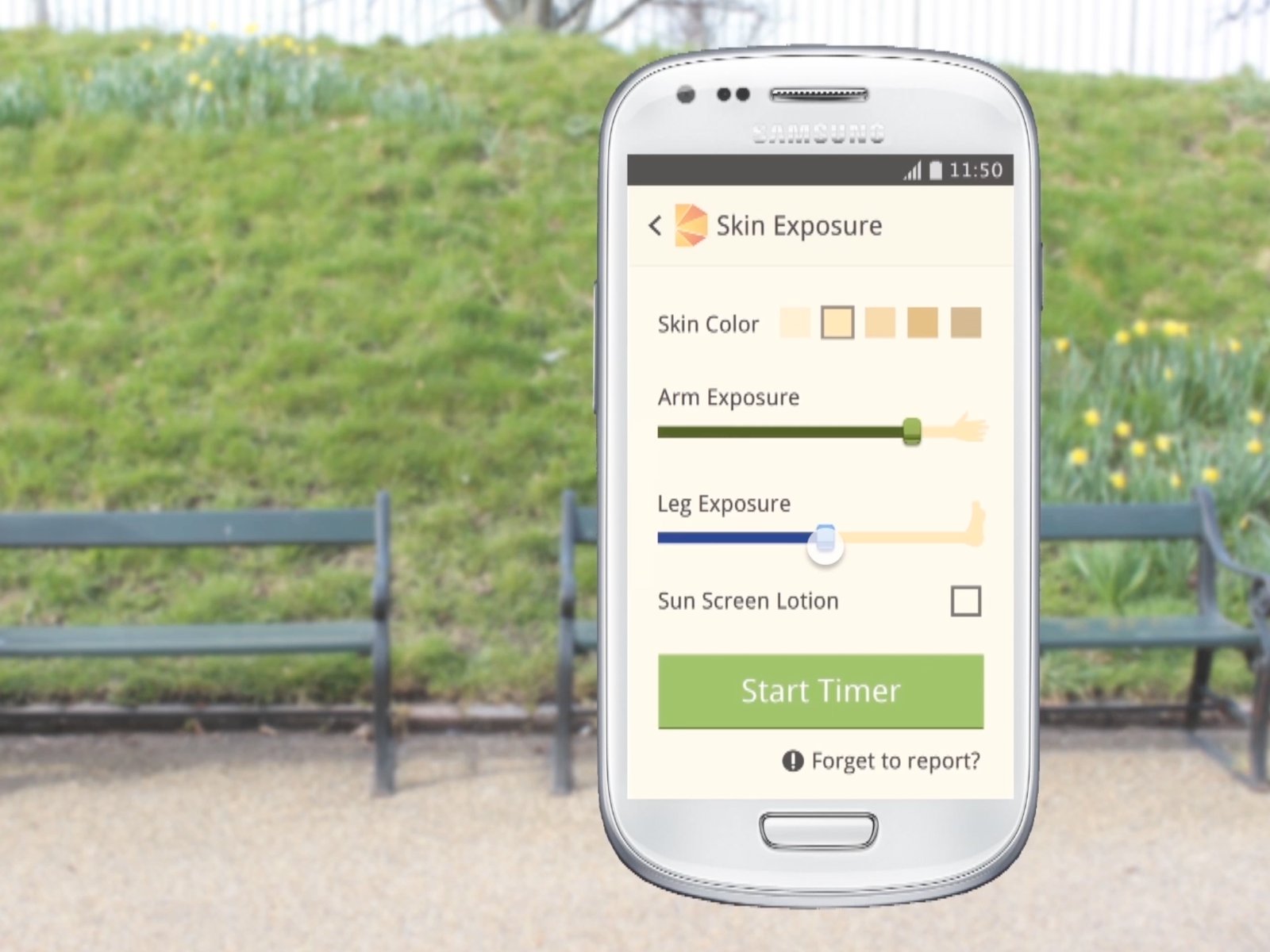
raDiance has been designed for Android. A widget on the home screen displays the user’s current UV levels and will launch the app. The main screen displays the user’s exposure to the sun together with the recommended amount of time for him or her to meet the optimal vitamin D balance. Swiping-up reveals more details about the day's UV conditions and the best time for exposure. To track time in the sun, a user can tap the stopwatch icon in the upper right corner. They will be taken to a user-input screen where they can select their skin color, input their skin exposure, and then initiate a session to track his or her time in the sun. The user can always enter past time spent in the sun by tapping on the “forgot to report” button.
User Experience
The user interface design is a simple and seamless process flow. Users can quickly view and understand their daily UV exposure and effortlessly track their time in the sun.
One of the main strengths of raDiance is the data visualization of UV exposure. A person’s daily exposure to UV radiation is beautifully displayed in a half disk of sun rays that slowly fills and changes color. Without technical charts or complex graphs, this visualization instantly communicates to the user how much UV radiation they have received and provides visual hints about whether they should get more sun or protect their skin. A drawer of information showing UV levels for the day and location can slide over the data visualization, providing additional information only when queried and simplifying the display of the main visualization.
The process of tracking sun exposure is similarly streamlined and fun to use. The user simply starts a session by tapping the stopwatch icon and then playfully enters their skin exposure levels using whimsical pant and shirt sliders. Over time, the application learns a person’s clothing habits to quicken this process even further.
Course Learnings
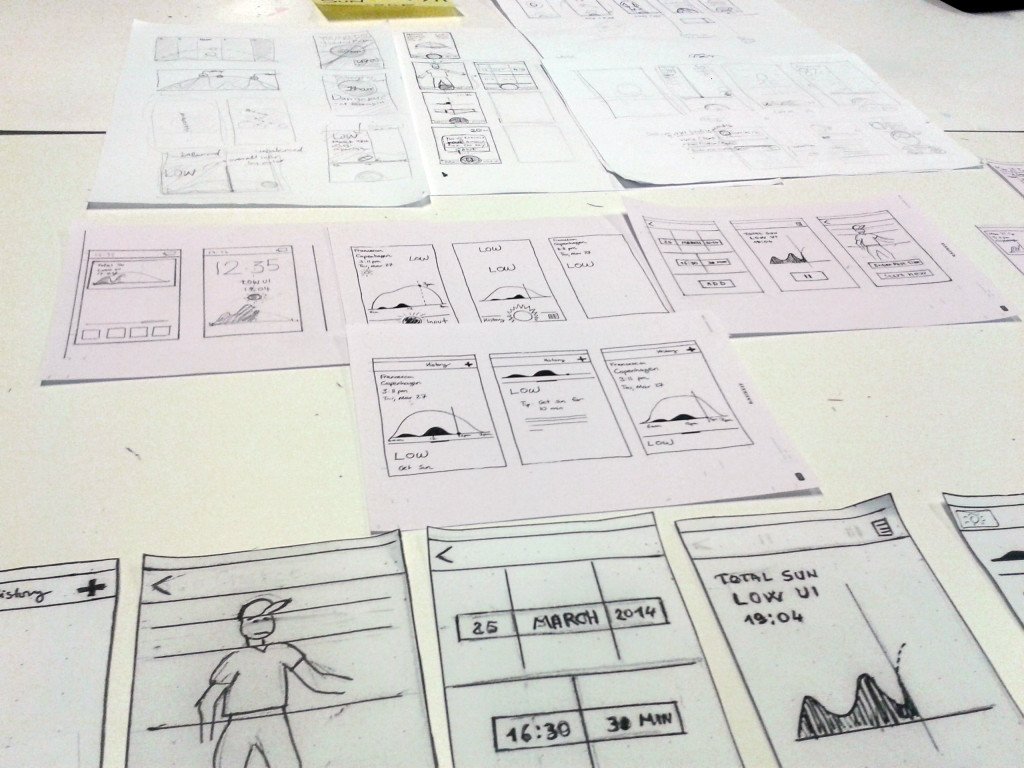
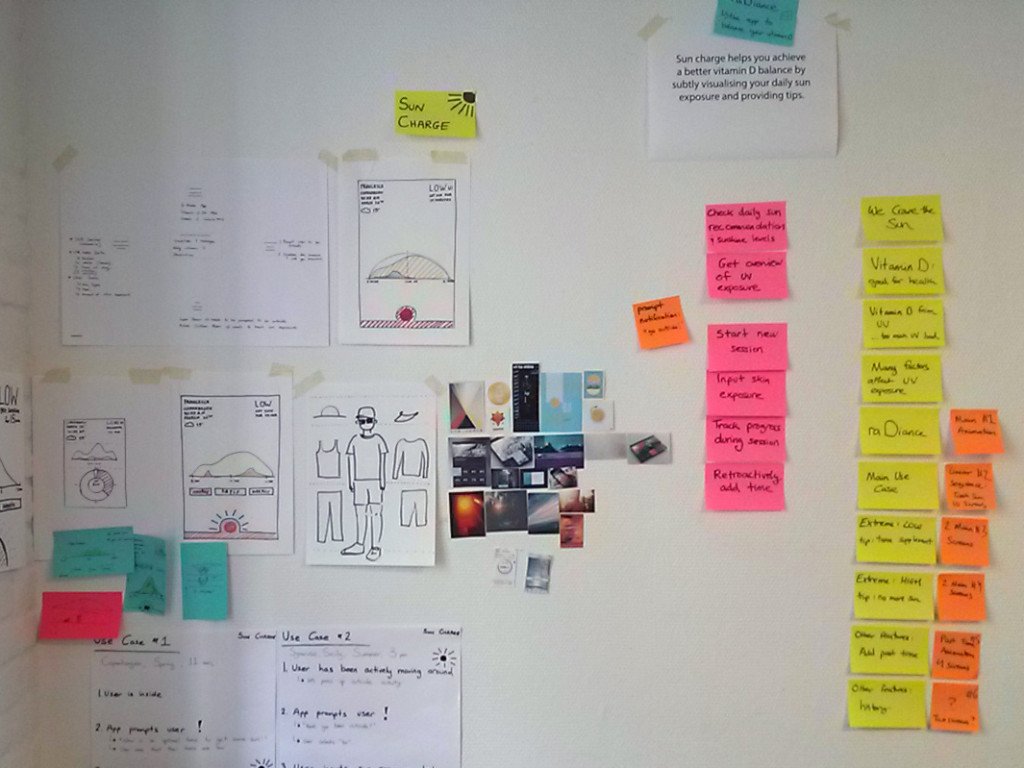
Using data from Copenhagen, we developed a simple prototype of key screens that demonstrate the main features of raDiance. Our biggest learning for this course was how to use platform standards for Android to solve GUI issues. We learned how to read human interface guidelines and integrate GUI standards with innovative data visualization. We also learned how to have a critical eye and conscientiously tweak our design on the typographic and pixel detail level.