RED | WetMoney
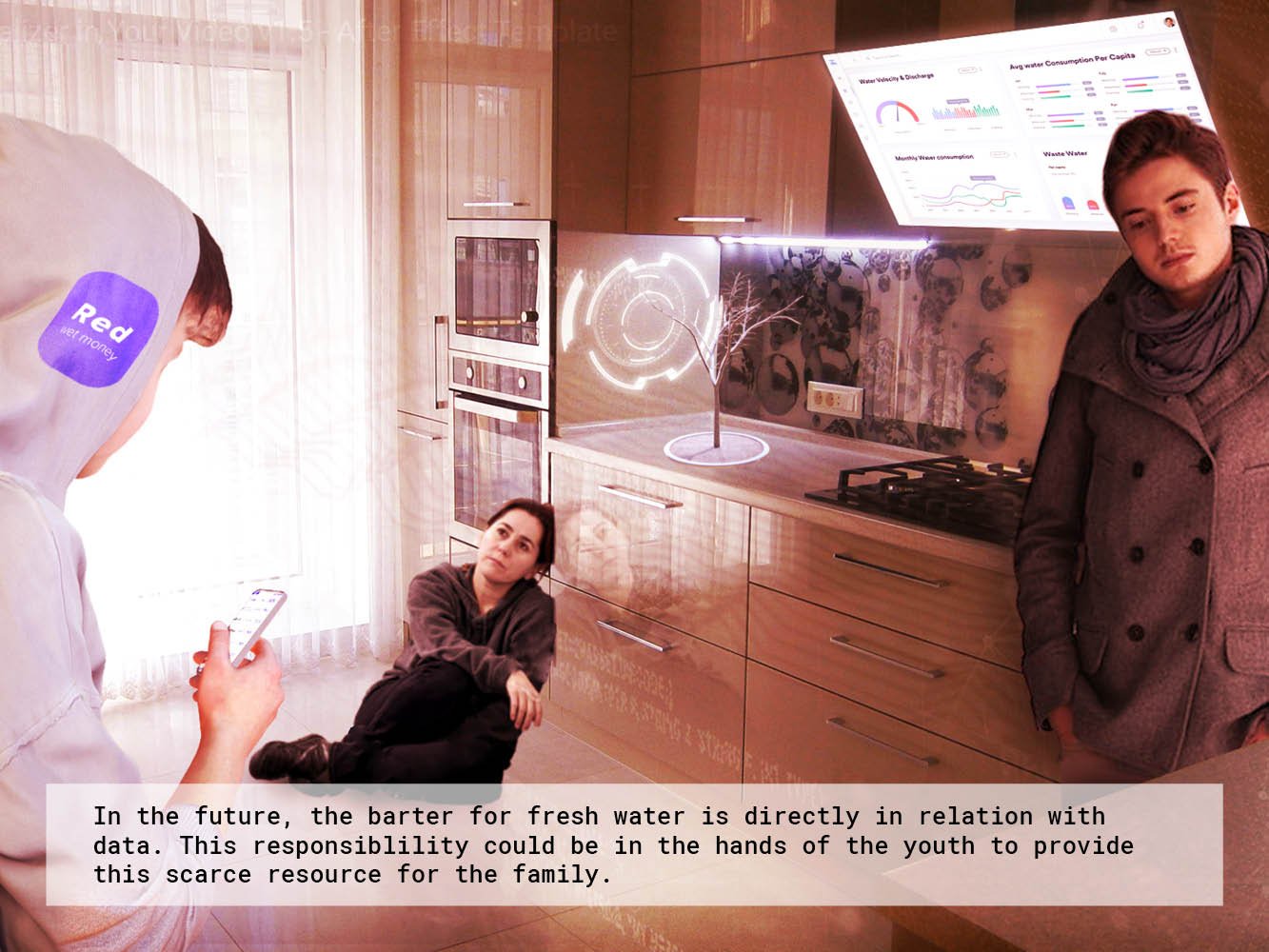
WetMoney is a speculative currency system, which was designed to explore ethical dilemmas in a future society confronted with resource scarcity issues, and what would happen if these issues were resolved in exchange for personal data.
The team was given a scenario where freshwater is scarce and was tasked to design a solution that challenges some ethical concerns which may arise because of this scenario. A speculative narrative was built around the crisis of a high-trust government system when they have the full governance of a limited water reservoir. The team looked into various policy systems to ensure every citizen retains their basic rights to have equal access to water while keeping the economy of the national resources sustainable. One of the totalitarian approaches were explored, where the government has full control of restricted water distribution, however, this could potentially lead to the problem of a Water Mafia.
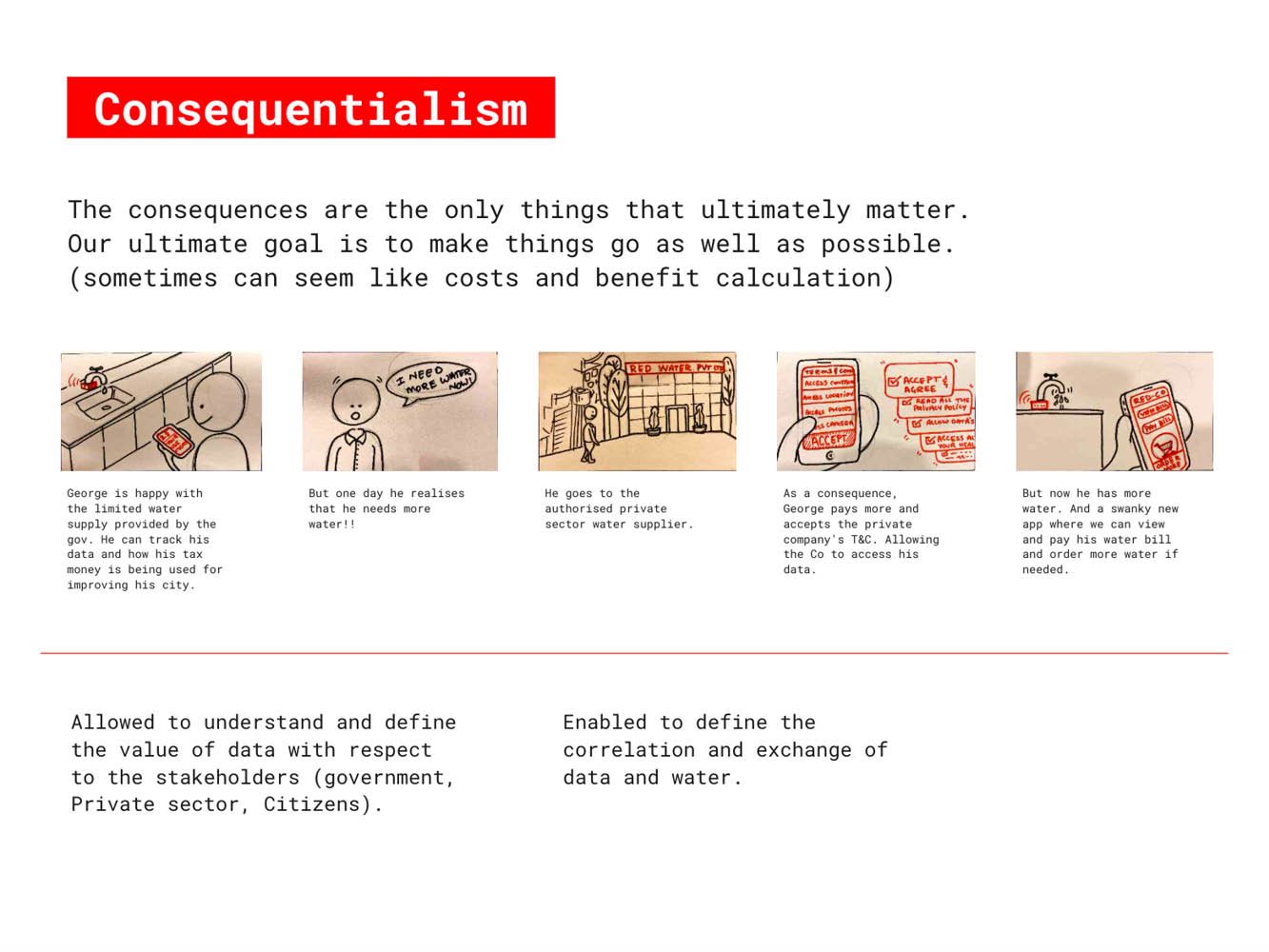
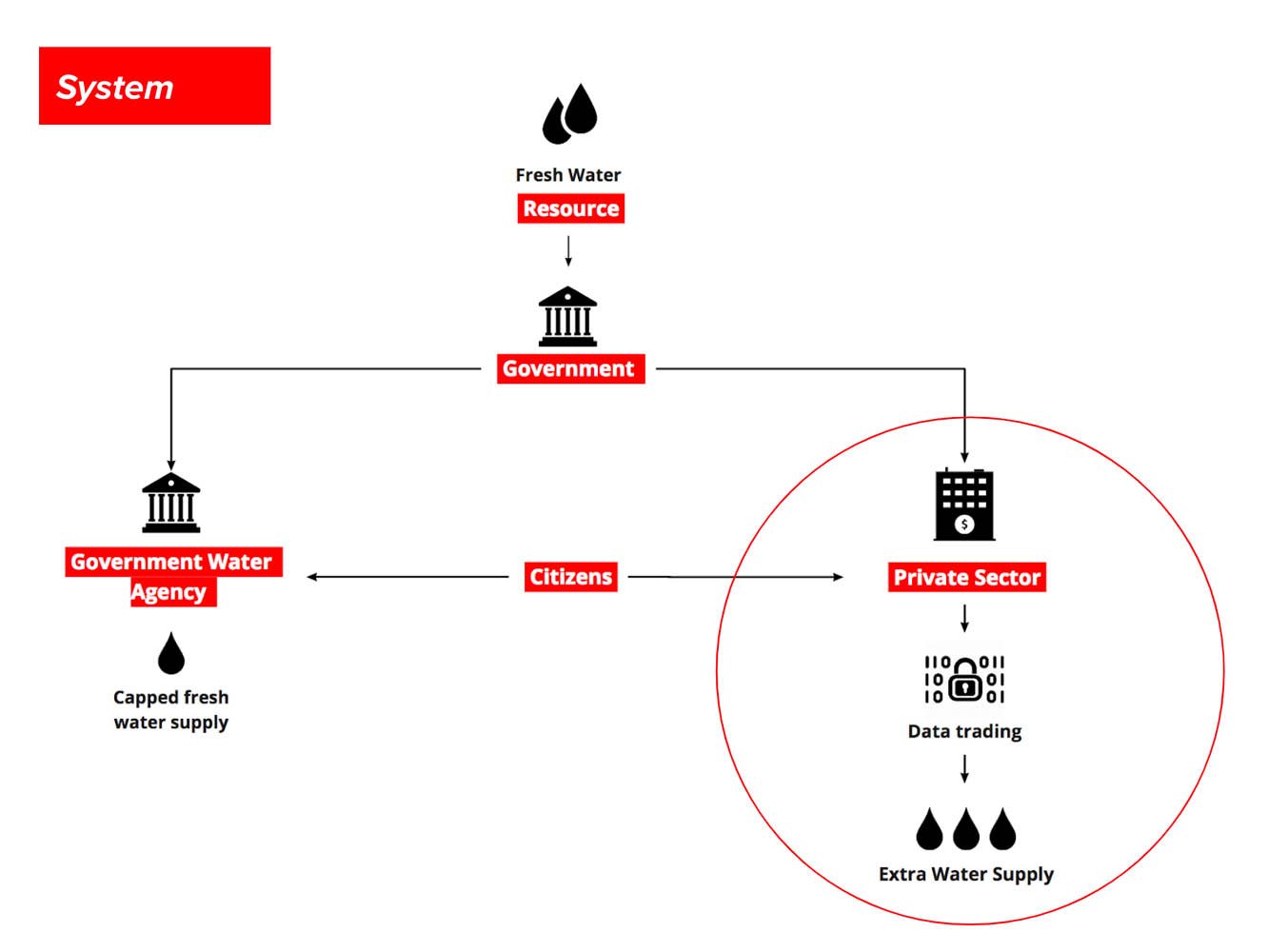
By looking through this issue with the utilitarian ethical theory, the team decided on a final policy proposition. The government continues supplying a minimal amount of capped water access to each household in order to maintain strong trust between the government and citizens. For any additional demand for water supply, citizens have to go to a private sector where they can purchase additional water at a higher cost. In this speculative future, data is highly valued for fueling technology development and economic advancement for the society. Thus, data is one of the accepted currencies for water exchange in the private sector.
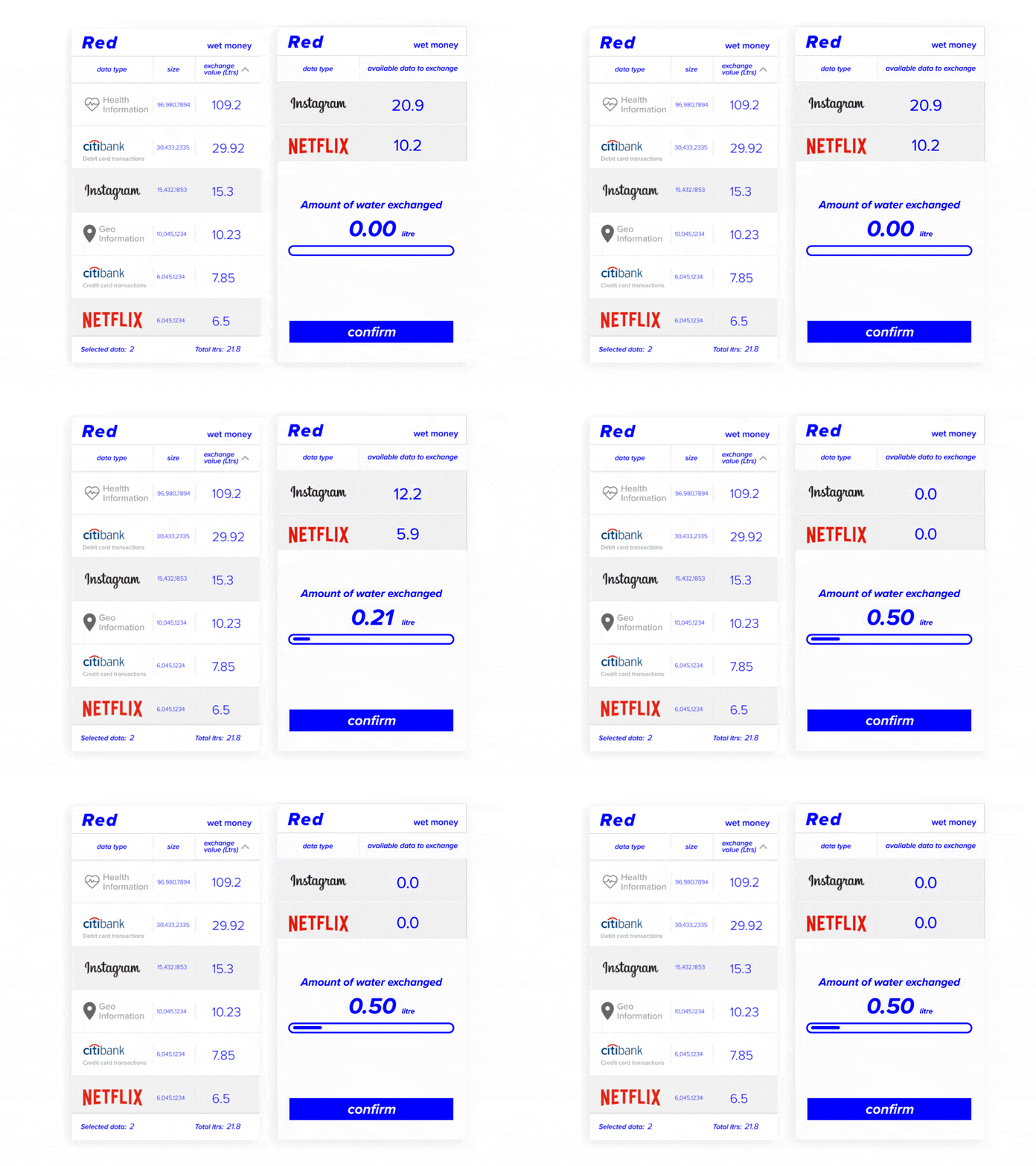
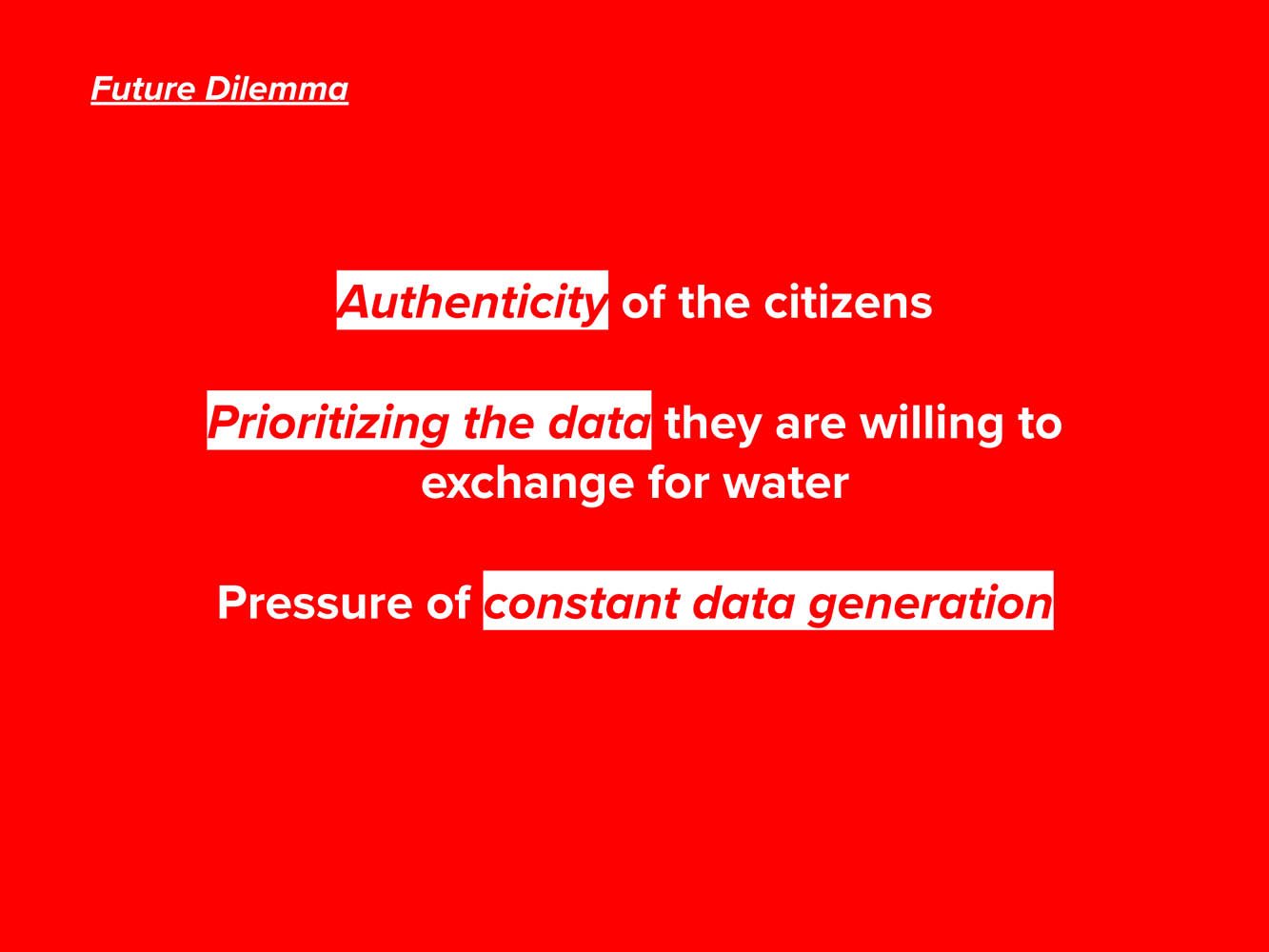
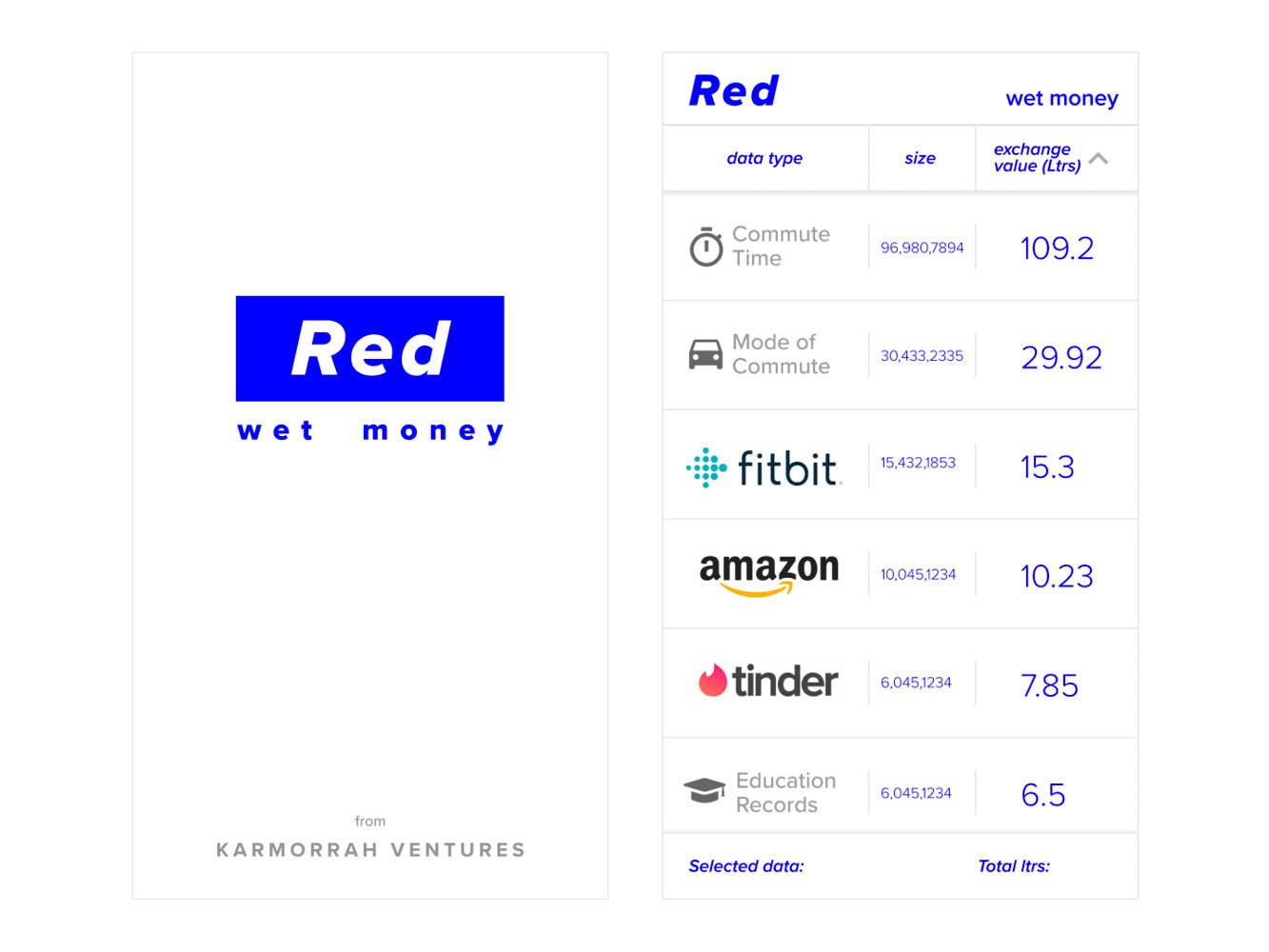
WetMoney was designed as a data currency exchange for water. Each type of data is valued differently based on its confidentiality level, as the rate for social media data fluctuates according to the market value to date. New data can always be generated to increase its value. This new currency system opens up various ethical discussions especially in evaluating the importance of personal data versus the need for water.