YouSure
Context
“I made up my mind at this point that I would never try to reform man—that’s much too difficult. What I would do was to try to modify the environment in such a way as to get man moving in preferred directions.” - Buckminster Fuller
YouSure is a three day project done during the week long Design for Behaviour and Impact course, which explored the concept of diagnosing human behaviours, designing interventions, iteratively building and testing the intervention and measuring the outcome of the intervention.
Problem
YouSure tries to tackle two problems: impulsive (online) buying behaviour that makes people buy things that are not a necessity and the subconscious feeling of having a ‘guilty conscience’ when they see someone who is underprivileged or economically poor.
It is an app built for people who struggle to balance donations vs purchases in their disposable income.
Hypotheses
The project was built on multiple hypotheses but one major hypothesis was that people spend money on things that they don’t need because most people have no clear idea on how to spend their surplus money.
Cognitive biases
With some help from the cognitive bias codex, it was clear that the user base predominantly had the following biases:
- Intrinsic & extrinsic motivation - want to help the poor
- Hassle factor/choice overload - tough to find reliable sources
- Identity/Social proof - buys things/spends money to maintain a social identity
Intervention moment/Solution
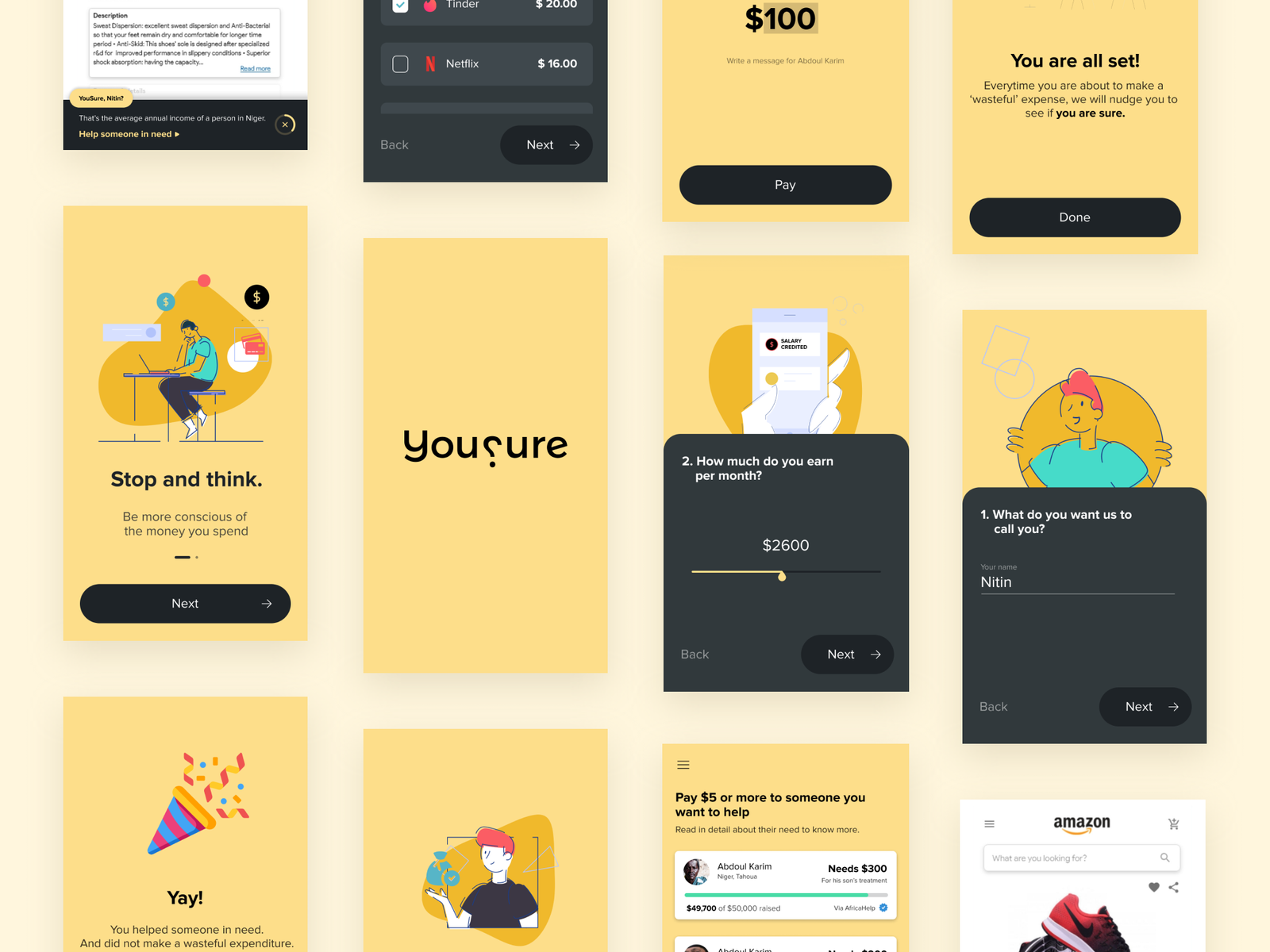
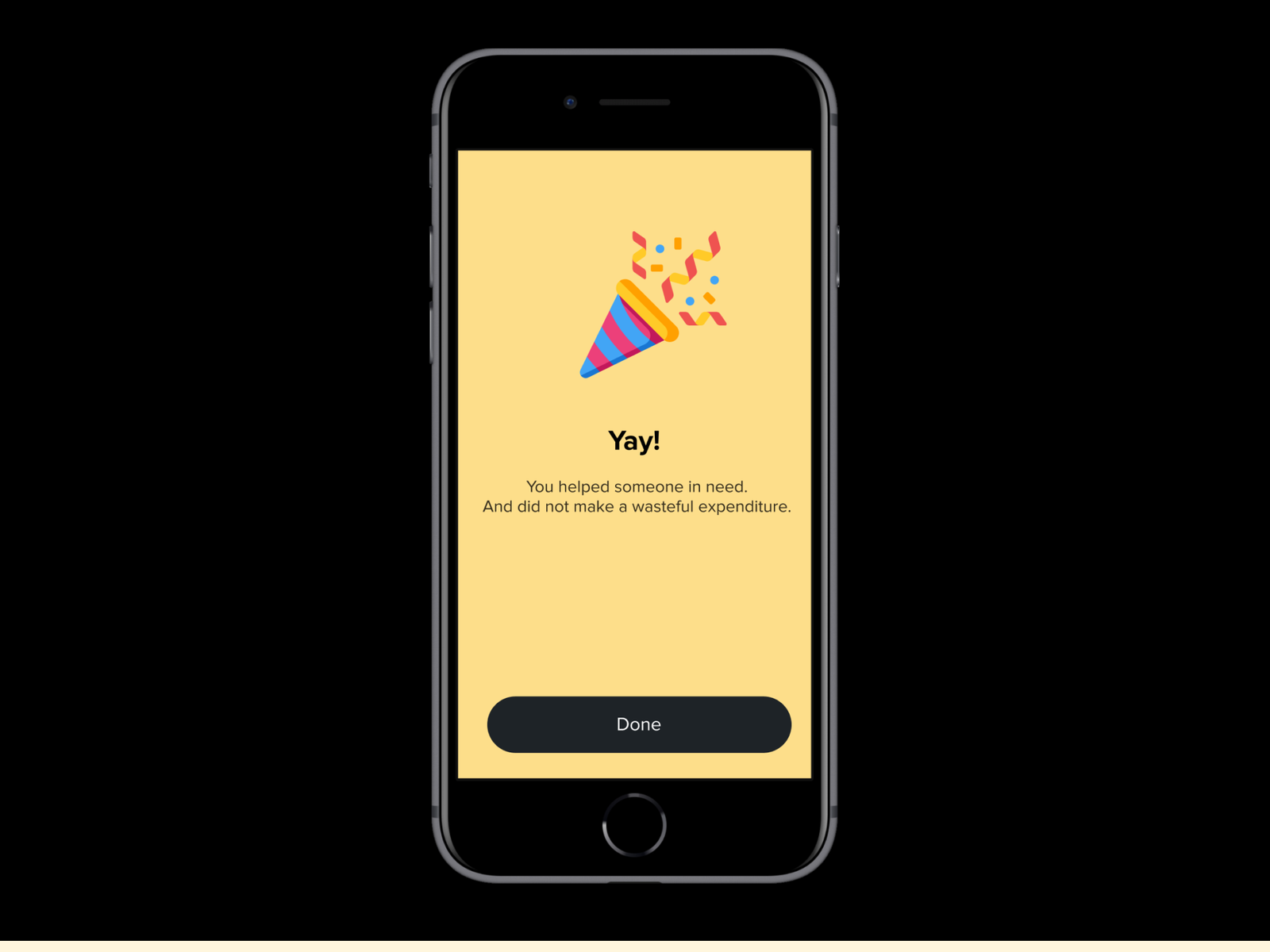
Yousure is an app that is designed to nudge the user to re-think their decision when they are about to checkout from any transactional app. Then, prompt the user to make a donation to someone he wants to. Hence, trying to tackle the two aforementioned problems: impulsive buying and subconscious guilty feeling when seeing someone underprivileged.
The behavioural strategy that was used here was to build on the intrinsic motivation that the user already has - to help the poor in some way possible and in turn, not to waste money buying things that are not needed.
The expected behavioural outcome from YouSure is for people to pause and re-think their impulsive buying habit and possibly form a habit of giving back to the community.